
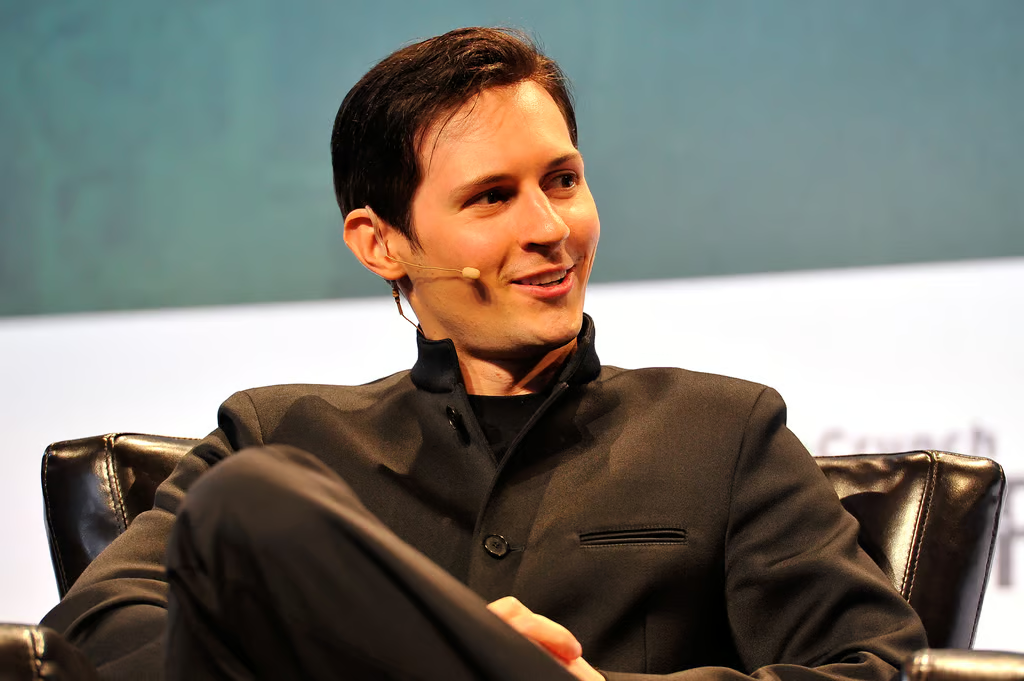
Pavel Durov, the Russian-born founder of Telegram.
Image Source: Politico
Symbolic Arrest Raises More Questions in the Ongoing Privacy vs. Security Debate
By Alice Quan, Staff Writer
From raining cash over St. Petersburg to facing arrest on charges of facilitating criminal activity, Pavel Durov’s journey has been nothing short of a rollercoaster. The billionaire CEO of Telegram is now embroiled in a legal storm in France, sparking urgent debates about the balance between privacy and accountability in digital communication.
On August 24, 2024, Durov was formally placed under investigation in Paris as part of a probe into organized crime linked to Telegram. Prosecutors allege that the platform has been used for distributing child sexual abuse material, among other illegal activities.
While Durov has not been remanded in custody, he is under judicial supervision, required to pay a €5 million deposit, report to a police station twice weekly, and refrain from leaving French territory.
A Revolutionary Platform with Controversial Implications
Telegram, launched in 2013, has rapidly grown into one of the world’s leading messaging platforms, boasting approximately 950 million monthly active users. Its features—large group chats accommodating up to 200,000 participants, end-to-end encryption, and a strong commitment to user privacy—have attracted a wide array of users ranging from everyday individuals to political activists in oppressive regimes. However, these same features have also made Telegram a fertile ground for the spread of disinformation, extremist content, and organized crime.
The Legal Challenge
The charges against Durov stem from allegations of complicity in the administration of an online platform that enables illicit transactions by organized gangs, as well as the refusal to cooperate with authorities in investigations concerning criminal activities such as child pornography facilitated through the app.
“It will no doubt be a landmark case,” states Dr. Arne Kislenko from the University of Toronto’s Trinity One program. He emphasizes that the significance of this case extends beyond the gravity of the allegations, noting that “it’s one of the first times any government has shown serious resolve in holding a top tech executive responsible for the actions of their technology’s users.” This marks a pivotal moment in the ongoing tension between corporations and governments over legal and ethical liabilities in the digital realm.
David-Olivier Kaminski, Durov’s lawyer, vehemently defends his client, stating that Telegram has complied with European digital regulations and moderated content in line with industry standards. He argues that it is “absurd” to suggest that Durov could be involved in criminal acts that do not concern him directly or indirectly. This defence underscores the tension between the expectations placed on tech leaders and the complex realities of managing digital platforms with millions of users. As the legal battle unfolds, the implications for the broader tech landscape could be profound.
Durov’s Changing Stance on Privacy?
Durov himself has consistently defended these privacy principles. A native of Russia, he is no stranger to controversy. He initially gained fame as the co-founder of VKontakte, Russia’s largest social media network, which he left in 2014 after refusing to comply with government demands to censor opposition groups. In a cheeky display of defiance, he mocked the authorities by changing his Twitter handle from “VK CEO” to “Porn King.”
Following his departure, he established Telegram, positioning it as a bastion for free speech and a tool for communication in the face of censorship. In a previous interview, Durov emphasized his refusal to bow to governmental pressure: “Where we thought it would be crossing the line… we would ignore [certain requests to remove content]”.
However, following his arrest, subtle yet notable changes have been made to Telegram’s policies, raising questions about whether the company’s stance on privacy is shifting. For instance, Telegram’s FAQ once claimed that “0 bytes of user data” had been shared with governments; it now states “user messages” instead. Additionally, the platform introduced a feature allowing users to report illegal content in private chats, and Durov recently clarified that IP addresses and phone numbers of violators may be shared with authorities, a point he downplayed as a “technicality.”
Public Reaction and Implications for Tech Governance
Durov’s arrest has sparked widespread debate among tech leaders and advocates of free speech. High-profile figures, including Elon Musk, have publicly defended Durov, arguing that holding tech executives liable for user-generated content poses a grave threat to freedom of speech. Musk described moderation as “a propaganda word” for censorship and called for Durov’s release, highlighting concerns that the arrest could set a dangerous precedent. Critics, however, argue that the rise of platforms like Telegram has created an environment conducive to the spread of harmful content.
The platform has faced scrutiny for hosting far-right groups and allowing conspiratorial and extremist narratives to proliferate unchecked. Following Durov’s arrest, Telegram has emphasized its commitment to compliance with European laws, including the Digital Services Act, while asserting that its moderation practices are in line with industry standards and continuously improving.
Despite these assertions, the complexities surrounding Durov’s case remain enigmatic, feeding speculation and conspiracy theories about both him and the French government’s motivations. As Kislenko points out, “I think there’s a great deal about him and his company, as well as the French government’s intentions here, that remains unknown: only deepening the mystery and, for some, feeding conspiracy theories.”
The stakes are high, not just for Durov and Telegram but for the broader implications of regulating digital platforms in an era of ever-growing privacy concerns.

