
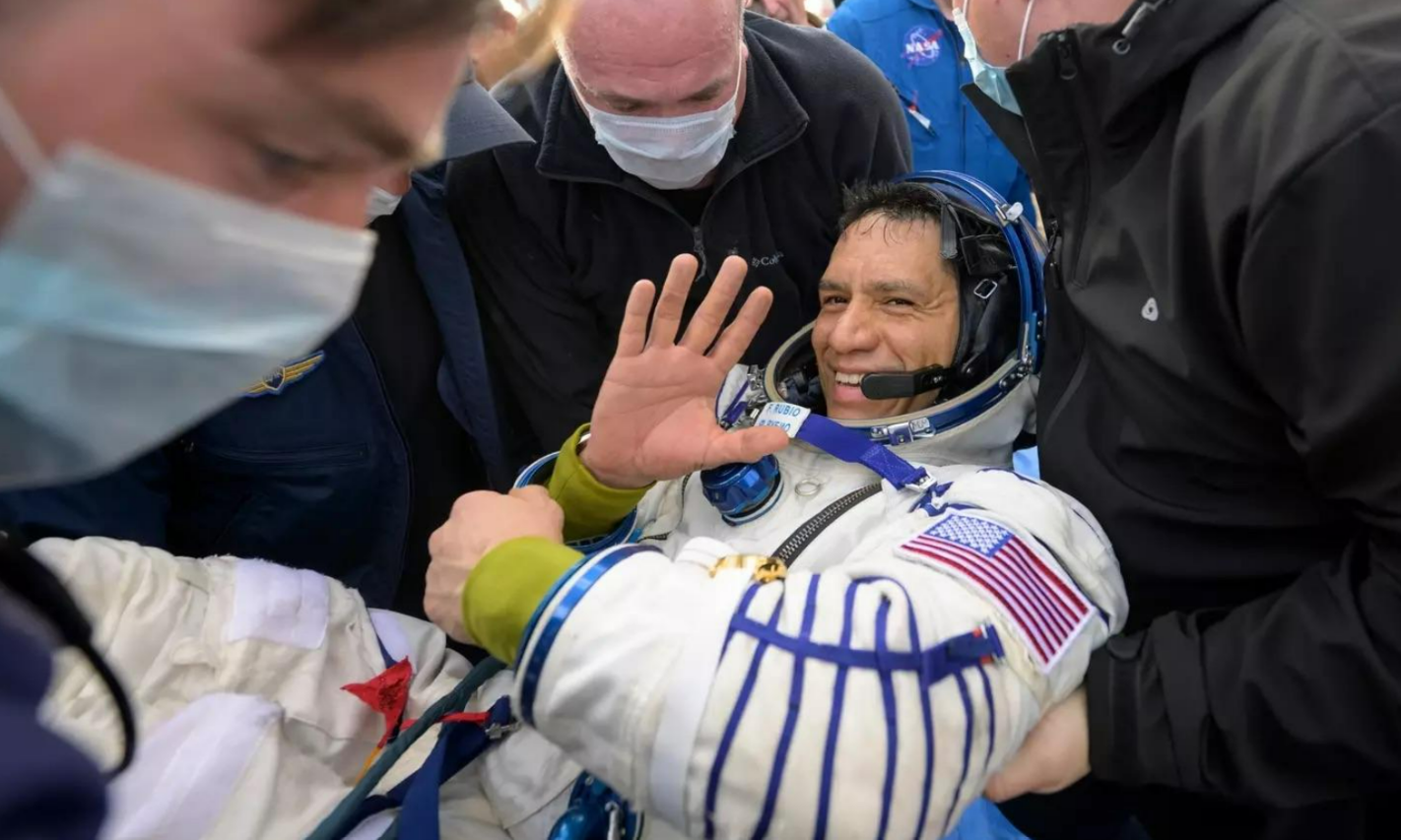
NASA Astronaut Franc Rubio lands on Earth after 371 days in the International Space Station, 2023.
Image source: CNN
Exploring the physical and psychological transformations of long-term space travel
By Asmi Khanna, Staff Writer
Many of us grew up dreaming to be astronauts, floating among stars and witnessing Earth from a distance. Yet, the significance of space travel goes beyond personal ambitions. Research conducted on the International Space Station (ISS) provides critical insights that shape our understanding of human health, technological advancement, and potential survival on other planets.
For example, the challenges of space travel—such as exposure to microgravity and cosmic radiation—offer scientists new perspectives on ageing, muscle and bone loss, and even cancer prevention. By tackling these questions in space, we not only prepare for future interplanetary missions, but also gain knowledge that can improve life on Earth.
With astronauts like Sunita Williams and Butch Wilmore currently stranded aboard the ISS, it’s crucial to examine what prolonged space-exposure does to the human body, especially for those who could spend a year or more in orbit.
The Importance of Research in Space
Recent missions, including Scott Kelly’s year-long stay on the ISS and the active missions of Williams and Wilmore, emphasize the challenges astronauts face in a microgravity environment. The recent return delays for Williams and Wilmore, due to issues with Boeing’s Starliner capsule, remind us that even the most advanced technology can encounter setbacks. NASA’s cautious approach to returning them safely highlights the rigorous requirements to sustain human life in space.
More than just a “home” for astronauts, the ISS serves as a unique, high-stakes laboratory where scientists study the effects of microgravity on the human body in real-time. This research protects the health of current astronauts, while unlocking insights that will shape future long-duration missions to Mars and beyond.
With upcoming missions potentially lasting up to 1,100 days, understanding these physiological changes is essential. Findings from the ISS will help develop countermeasures that safeguard astronauts from the debilitating effects of prolonged space travel and, in turn, enable humanity to explore the Solar System safely and sustainably.
The Toll on Muscles and Bones
One of the most immediate effects of living in microgravity is the deterioration of muscle and bone mass. The absence of gravity means that the body does not have to work as hard to maintain posture, leading to muscle atrophy. Studies have shown that astronauts can lose up to 20% of muscle mass within two weeks of being in space and up to 30% during longer missions lasting three to six months. Similarly, bones lose 1-2% of mass each month. This accelerated bone loss increases the risk of fractures, and recovery after returning to Earth can take up to four years.
To combat these issues, astronauts on the ISS engage in rigorous exercise routines for approximately 2.5 hours each day, utilising specialised equipment designed to simulate weight resistance. However, recent studies suggest that even this level of physical activity may not fully counteract muscle and bone loss, emphasising the need to develop more intensive training regimens.
Temporary and Permanent Effects on Vision
Microgravity not only impacts muscle and bone but also poses serious risks to eyesight. The shift in bodily fluids can cause increased pressure in the skull, leading to fluid accumulation in the optic nerve and changes in vision. Astronauts may experience blurred vision or alterations in the structure of their eyes after spending just a few weeks in space. While some of these effects can reverse within a year of returning to Earth, others may be permanent.
Additionally, the lack of atmospheric protection against cosmic rays exposes astronauts to radiation that can cause further vision problems. Reports from astronauts mention experiences of light flashes in their vision due to cosmic ray interactions, raising concerns about long-term visual health for those spending extended periods of time in space.
Brain Adaptation in Microgravity
The brain also undergoes significant changes during extended missions in space. Research into Scott Kelly’s year-long stay aboard the ISS revealed alterations in cognitive function, particularly a decrease in speed and accuracy. It appears that the brain requires time to readjust to Earth’s gravitational environment upon return. Studies have also indicated structural changes in the brain during spaceflight, including shifts in neural connectivity related to movement and orientation.
Moreover, astronauts like Kelly, who have undergone long missions, may experience swelling in the ventricles of the brain, which can take years to normalize. These alterations invoke important questions about the long-term neurological health of astronauts, which implicate future deep-space missions.
Gut health: The Hidden Impact of Microgravity
Perhaps one of the most surprising effects of spending extended time in space is the impact on gut health. Research examining the microbiomes of astronauts, particularly Kelly, revealed significant changes in the composition of gut bacteria during their missions. Microgravity and the shift in diet can lead to alterations that affect digestion, immune function, and overall health.
Maintaining a diverse and balanced gut microbiota is crucial for optimal health. The changes experienced in space highlight the need for further investigation into how to best support astronauts’ digestive health during long missions.
Preparing for Future Missions
As humanity sets its sights on exploring deeper into the Solar System, understanding the myriad effects space travel has on the human body is more important than ever. Findings from recent missions are invaluable as they provide insight into the challenges of long-duration spaceflight. The scientific data collected from these missions will help to shape the preparation for future space endeavours, including missions to Mars.
While the dream of space travel is an exciting one, it comes with significant risks to our physical and mental well-being. The ongoing research of the ISS will not only enhance our understanding of human physiology but also ensure that astronauts remain healthy and safe during their journeys among the stars.
The sacrifices made by astronauts today, such as Williams, Wilmore, Kelly, are paving the way for a new era of space exploration and discovery; they are pushing the boundaries of what we know and where we can go. Their courage and resilience inspire us to dream big and reach for the stars, even as we navigate the complexities of life beyond our planet.

