
Patience, presence, and care at the end of life
By Alysa Leigh, Staff Writer

Photo Source: WesleyLife
The idea of an ending has never sat easily with many of us. From the beginning of time, humans have searched for ways to soften, delay, and avoid endings altogether. We fill the silence before it grows uncomfortable. We overextend ourselves to maintain connections that have already begun to fade. We distract ourselves with noise and movement because stillness and silence feel like an invitation to confront what we would rather not see.
This instinct is not a failure of character. It is simply a deeply human response. Endings challenge us with uncertainty, and uncertainty resists control. To sit with something as it declines—whether a relationship, a chapter of one’s life, or an aging body—is to admit that not everything can be fixed, even with great effort. In a culture that rewards productivity and momentum, choosing to stay with what is unresolved can feel almost unnatural.
Yet, no matter how carefully we curate our lives to avoid loss, endings arrive all the same. Time continues to flow. Classmates graduate. Bodies change. Memories fade. People leave. And eventually, each of us must reckon with the one ending that, more than all others, cannot be negotiated: death. It is uncomfortable to name, perhaps even morbid, but refusing to acknowledge the inevitability of death does not diminish its presence in our lives. If anything, it deepens our unease.
When death approaches, our instinct to rush often intensifies. We search for the right words, the right actions, the right way to make meaning out of what is happening. We want closure, reassurance, progress—something that resembles resolution. Denial, anger, bargaining, depression, acceptance—you’ve probably heard of it—the five stages of grief. We like to imagine that grief evolves neatly and linearly, but the truth is, grief is far more complicated and messy. Grief and death, and the uncertainty that accompanies them, do not travel a nice, straight path.
Perhaps our discomfort with uncertainty is why the idea of hospices emerged in the first place. Hospice care brings together an interdisciplinary community of professionals and volunteers who provide physical, emotional, and spiritual support to individuals with terminal illnesses and their loved ones. The word “hospice” itself traces back to early Roman times and is derived from the Latin word hospes, referring to guest houses that offered rest and care to travellers and the sick. At its root, hospice has always been about shelter—about receiving someone not as a problem to be solved, but as a guest to be cared for.
Modern hospice care took shape in 1967 with the founding of St. Christopher’s Hospice in London, England, by Dame Cicely Saunders, a nurse, social worker, and physician, whose work transformed how we understand the end of life. Her vision was shaped by a patient she met nearly two decades earlier, David Tasma, who was hospitalized with untreatable cancer. Through him, Saunders came to recognize that suffering at the end of life extends far beyond physical pain. She introduced the concept of “total pain,” which acknowledges how emotional distress, fear, memory, and spiritual unease are inseparable from the body’s physical decline. Saunders’ philosophy was simple yet radical: every person matters until their final moment, as she conveyed: “You matter because you are you, and you matter to the last moment of your life. We will do all we can to help you, not only to die peacefully, but to live until you die.”
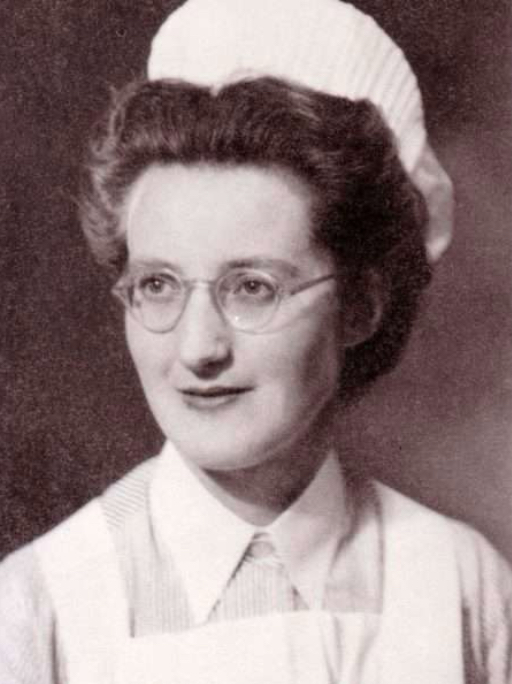
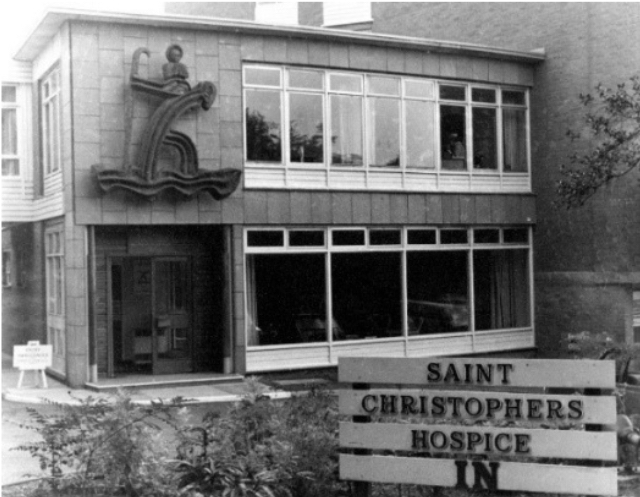
Photo of Dame Cicely Saunders, Photo Source: St. Christophers
Photo of St. Christopher’s Hospice, Photo Source: healthbook TIMES Oncology Hematology
Hospice, then, is not about “giving up” on life. It is about choosing care when a cure is no longer possible. It is about recognizing that even when time is limited, life does not lose its meaning. To remain with someone at the end of their life, whether as a healthcare worker or a family member—to offer companionship despite knowing how it will end—is an act of courage. It requires a willingness to slow down, to listen without rushing towards resolution, to notice small shifts in mood, energy, or breath. It asks us to sit with discomfort, sadness, and the ache of unfinished conversations, feelings we are often taught to avoid or smooth over.
The rhythm of hospice care is rarely predictable. Some days, a patient might feel more talkative and expressive, and other days, they might be quieter and withdrawn. What matters most in these moments is not rushing them or forcing conversation, but simply being there. Presence itself becomes a powerful form of care in itself, something which we oftentimes don’t realize. Hospice philosophy asks us to be fully present with another person, in whatever way the moment allows—in an understanding glance during an intimate conversation, in laughter exchanged over a board game, or in the simple act of sitting quietly at someone’s bedside.
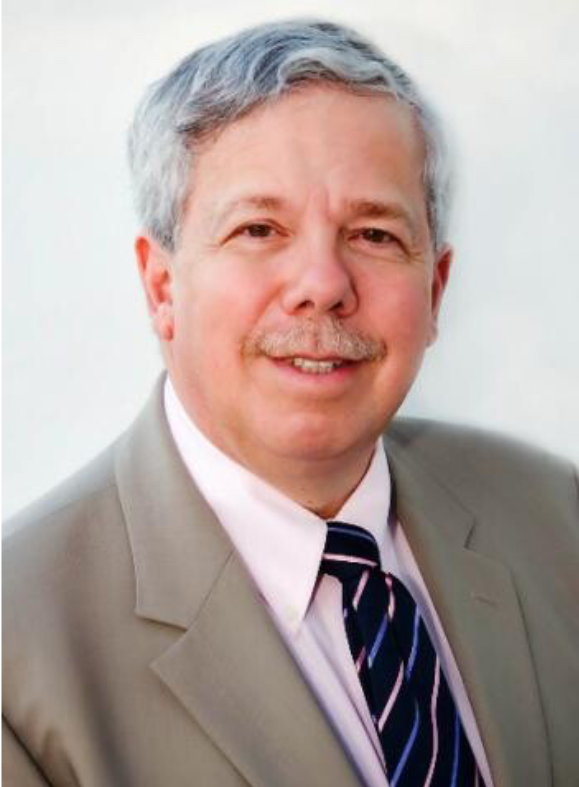
Dr. Larry Librach, founder of Mount Sinai Hospital’s Temmy Latner Centre for Palliative Care and former Director of the Joint Centre for Bioethics at the University of Toronto, expressed that “Dying is as important as birthing, and we need to make sure that people are cared for at both ends of life, as well as the life in-between.” Dr. Librach was an inspiring figure as he greatly influenced the local palliative care system by designing Ontario’s first home-based palliative care program beginning in the late 1970s, all the way until his passing in 2013. His goals were not only to ease patients’ suffering, but to do so in a place where patients wanted to receive medical care, emphasizing commitment to patient autonomy.
Photo of Dr. Larry Librach , Photo Source: Temerty Faculty of Medicine
As a result of Dr. Librach’s leadership and advocacy, palliative medicine has gained recognition as a vital and respected field within Canadian healthcare. Through his role in national educational initiatives, he helped introduce end-of-life care into medical school curricula across the country, ensuring that future physicians would be equipped not only to treat illness but to accompany patients through their final stages of life with compassion and dignity. His influence continues through the ongoing work of the Temmy Latner Centre, which today provides round-the-clock physician support to thousands of patients each year living with complex and life-limiting conditions.
When Dr. Librach himself was diagnosed with pancreatic cancer in 2013 at the age of 67, he lived out the principles he had spent his career advancing. He used his remaining time to speak openly about death, to advocate for the importance of palliative care, and to prepare both himself and those he loved for the end of his life. He died as he wished—at home, surrounded by family—offering a final, quiet testament to the idea that dying, like living, deserves intention, patience, and care.
Dr. Librach’s life and death not only offer an example of medical leadership, but also reveal a way of relating to endings with intention rather than avoidance. His decision to die at home, surrounded by family, was not about controlling death, but about aligning it with personal values, care, and place. In choosing not to medicalize or rush his own death, he embodied the philosophy he spent his life advocating: that dying is not a problem to be solved, but a part of life that deserves attentiveness and devotion.
Hospice, at its core, asks us to rethink what we believe care is supposed to look like. It does not promise certainty, resolution, or relief from discomfort. Instead, it offers something far less dramatic and far more demanding: attentiveness. To care, in this context, is not to intervene endlessly, but to recognize when intervention is no longer the most humane response. It is to acknowledge that presence can hold weight even when outcomes cannot be changed.
This reframing is difficult precisely because it runs against so many of our instincts. We are trained to equate worth with productivity and love with action. We measure success by improvement, by forward motion, by visible progress. Hospice quietly unsettles these assumptions. It reminds us that there are moments in life when slowing down is not a failure, but a form of respect—an acknowledgement that time, when limited, deserves to be met with care rather than urgency.
Learning not to rush the end does not mean resisting death, nor does it mean romanticizing it. It means allowing endings to exist without forcing them into narratives of redemption or closure. It means staying present even when there is nothing to fix, and trusting that accompaniment, however quiet, is meaningful. In this way, hospice does not diminish life; it sharpens it. It draws attention to what remains when distractions fall away: connection, attention, and the simple act of staying.
This is what hospice ultimately teaches us, not about dying, but about living. That time is not something to outrun or conquer, but something to inhabit. That care does not always arrive with answers. And that we should not hurry the most important moments of our lives, but instead remain still long enough to fully experience them.
To learn not to rush the end is, in many ways, to learn how to be human—patient, present, and willing to stay, even when the ending is inevitable.

