
How political complacency is reversing decades of public health progress in North America
By Saanvi Mazumdar
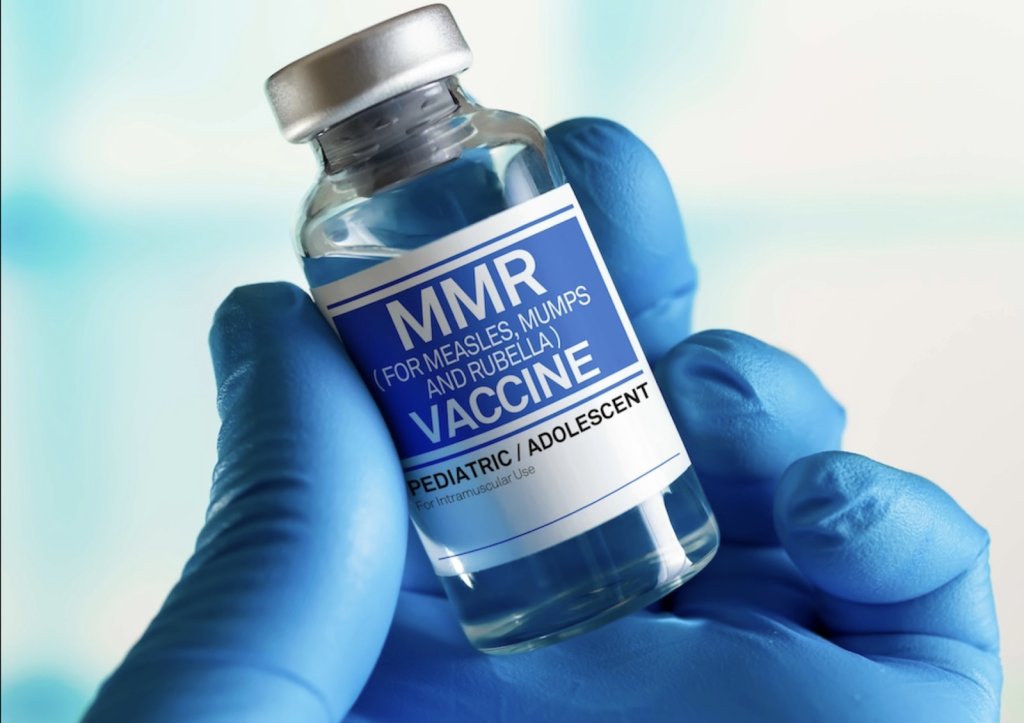
Photo source: The Tyee
For much of the late twentieth century, measles was widely considered a solved problem in North America. This confidence was the result of immense effort put into making progressive public healthcare system and developing the first measles vaccines in the 1950s. Soon after, global health organizations set an ambitious goal of eliminating this disease entirely. While full eradication was not achieved, vaccination campaigns were enormously successful. Measles cases dropped by more than 80% across several countries, and many were even officially designated measles-free.
Measles is an extremely contagious airborne viral disease. While an effective and widely available vaccine means most infections can be prevented entirely, the virus poses serious risks when immunization rates decline. In unvaccinated individuals, measles can lead to severe complications, particularly in young children and those with weakened immune systems, where it can become life-threatening.
For many of us, measles faded quietly into the background of history. It appeared in textbooks rather than hospitals, a disease that seemed firmly confined to the past. The past few years, however, have shown how dangerously misleading that assumption was. What once felt obsolete has returned as one of the most pressing public health concerns today. Initial outbreaks were documented in 2024, and due to the virus’s extreme contagiousness, cases have rapidly crossed borders. Today, most countries report a significant rise in measles cases. In Canada alone, 67 confirmed cases have already been recorded in 2026.
The return of measles reveals less about the virus itself and more about the state of our current world. From war-torn regions with collapsed healthcare systems to opulent suburban communities, measles is resurfacing across vastly different political and economic landscapes. This raises a troubling question: how can places with such drastically different economies and healthcare systems be experiencing the same preventable tragedy?
In regions such as the Middle East and North Africa, war, displacement and poverty have led to a complete collapse in public health infrastructure. With the lack of proper funding and hospitals overwhelmed by the daily casualties from the ongoing Middle Eastern crisis, like the genocide in Palestine, survival takes urgent precedence over the establishment of preventive care. In these contexts, the increase in measles cases is unfortunate but remains unsurprising. When access to basic healthcare is limited, immunization programs are among the first systems to falter. Countries that once came close to fully eradicating this disease are now having to figure out strategies to contain the spread of this disease.
However, what is surprising, and maybe even more alarming, is the resurgence of measles in more economically developed nations that already have established healthcare systems and proper funding.
Declining vaccination rates in countries with advanced infrastructures are driven by misinformation, political polarization, and shifting health policies. Changes in political leadership have led to a growing dismissal of immunization programs, and along with constant international travel, immigration, and cross-border movement, these outbreaks no longer remain contained within national boundaries.
Ultimately, the return of measles cannot be analyzed through a purely medical lens. It is deeply intertwined with politics, international policy, and collective responsibility. Preventive programs designed to improve public health cannot be treated as temporary measures; they must be continuously reinforced by leaders and integrated into everyday life as essential requirements. The reemergence of measles should serve as a cautionary tale, prompting nations to work with international agencies to develop long-term public health policies.

