
We swipe through TikToks the way Gallimard stares across the opera house, totally transfixed, educated (we think), special (we think).
By Sophia Chen, Staff Writer
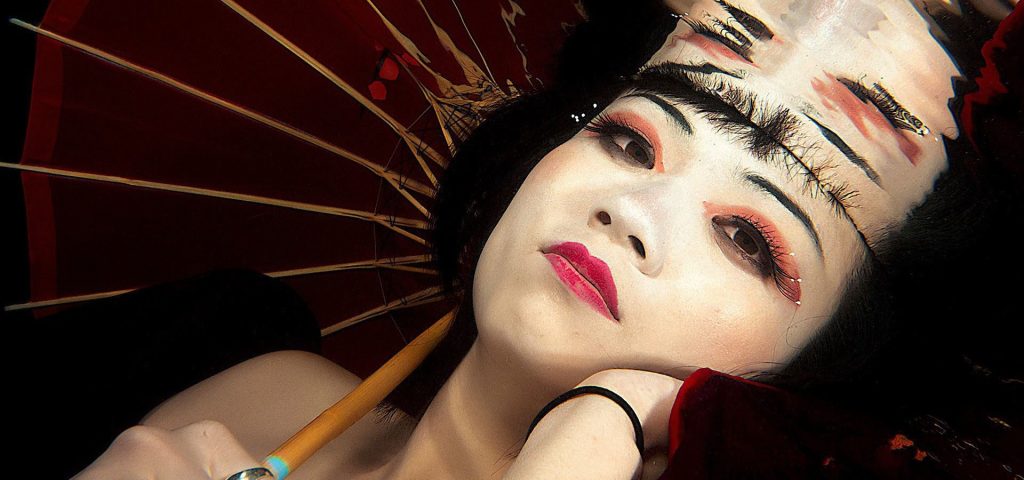
Photo source: Jason Heller
By now, you’ve probably scrolled far past someone on your FYP proclaiming themselves “newly Chinese.” They’re boiling apples in their water, shuffling around in indoor slippers, doing tai chi at sunrise. It’s #Chinamaxxing. Cute, maybe. Harmless, perhaps.
Though, as the trend peaked in February, hit the BBC, and is now dying down, you might have also seen critiques of the trend online for its Orientalist simplifications of Chinese culture. Some arguments, both for and against the movement, have been stronger than others. Now more than ever, it’s worth asking: what are we actually consuming when we consume “China”? There lies a haunting answer from 1988.
A few months ago, I watched David Henry Hwang’s infamous film M. Butterfly with Emergence, our St. George campus East Asian queer support group, borrowed on VHS from the library and screened in Robarts on a Thursday night. Thirty-four years after its 1988 release, we gathered to talk about a film that asks urgent questions about desire, deception, and who gets to speak for whom. This discussion sparked my inspiration for this article. In 2026, as we enter “a very Chinese time in our lives,” the film’s lessons about misrecognition feel urgent. We are still, it seems, in love with our own fantasies.
Sorry, What Infamous Film?
If you haven’t seen M. Butterfly, here’s what you need to know: it’s the 1960s Cold War era, and René Gallimard is a mid-level French diplomat stationed in Beijing. At a state opera performance, he becomes transfixed by Song Liling, an androgynous Chinese opera performer of devastating beauty and poise.
This plot is inspired by the true story of Bernard Boursicot, who, like the fictional Gallimard, was a mid-level French diplomat stationed in Beijing who conducted a twenty-year affair with Shi Pei Pu, a Chinese opera performer. In 1986, an espionage trial revealed that Shi Pei Pu was agender and born male and had been working as a spy for the Chinese government. Pu had used the affair to deceive Bouriscot into sharing sensitive government information all along.
Gallimard falls in love with Song Liling’s performance of a young begrieved geisha’s suicide from Giacomo Puccini’s 1904 play Madama Butterfly, where she is abandoned by an American man. Of the film’s most striking parallels, M. Butterfly ends with Gallimard’s suicide in prison, dressed as a geisha, cut amidst footage of Liling’s jet set departure from French courts as a man.
M. Butterfly, directed by David Cronenberg and starring Jeremy Irons as Gallimard, premiered at the height of a geopolitical moment in the Cold War’s final chapter, when China was simultaneously opening to the West and brutally consolidating control at home. It’s a film about what Western men imagine when they encounter China, and what they willfully refuse to see.
The Trend Explained
So, present-day Chinamaxxing sentiments on social media are nothing new. Western orientalist fantasies of an exotic, timeless, spiritually superior East have been around for centuries. But something shifted last year. Chinese infrastructure became visible internationally through “glitzy skyscrapers,” high-speed rail, and electric vehicles everywhere. Young Americans who came of age watching the Iraq War, 2008 financial crisis, and January 6th insurrection watched their own country stall while China built entire cities in months. When your country can’t build high-speed rail but you scroll endlessly through videos of it, the future starts to look Chinese.
The algorithm certainly helped. TikTok and RedNote flooded feeds with glamorous glimpses: Luckin coffee delivered in minutes, Chongqing’s neon cyberpunk streets, powdery makeup looks, wellness tips from creators who position Chineseness as aspirational. And yes, many of these creators are genuinely Chinese or Chinese-American and are authentically sharing their culture. However, social media algorithms do not spread everything equally. As with all content, it amplifies the beautiful, filtered images of China that drive engagement while quietly suppressing inconvenient realities.
Gallimard and the Opera
Early in M. Butterfly, Song Liling invites Gallimard to the Peking Opera to “further your education” after laughing at his ignorance in praising the beauty of Madama Butterfly’s suicide scene. “If a blonde cheerleader fell in love with a short, Japanese businessman,” Liling asks, “you would consider this girl to be a deranged idiot, correct?”
Throughout the film, Liling makes several sharp critiques of Western orientalism. Yet importantly, this is also the crux of his manipulative tactic. Liling invents fictitious customs of Chinese purity culture to disguise his gender in the bedroom. By lecturing on orientalism, he also encourages Gallimard to feel uniquely educated, able to understand China and Chinese beauty, positioned as the rare white man who “gets it.” Gallimard feels seen, intelligent, initiated. Meanwhile, he stares blankly across audiences at the Peking Opera and feeds misinformed psychoanalyses of Vietnamese troops to his superiors at work, convinced that the Vietnam War will be avoided. He fails to recognize that Liling feeds him a broader deceptive fantasy, albeit anchored in grains of truth.
What Authentic Engagement Actually Looks Like
In my opinion, the uncomfortable truth of M. Butterfly is that Gallimard didn’t have any moral obligation to learn Chinese language or culture. But he would have been a better diplomat who was more accurate, less manipulated, and less likely to make catastrophic errors both professionally and personally, if he had. He could have talked to people beyond Song Liling. He would be able to seek multiple sources, competing perspectives, information that contradicted his own desires to make himself harder to deceive.
This same idea applies to Chinamaxxing. As an outsider, perhaps you don’t have to care about China. But if you decide to form opinions about another country that shape how you vote, where you want to live, or what you think the future looks like, then doing your research and consuming media with due diligence matters.
And yes, Western media curates images of China too. The BBC article on Chinamaxxing unsurprisingly concludes by emphasizing China’s prevailing political problems. Meanwhile, TikTok algorithms behaviourally bias toward highlighting the beautiful parts of China. Both are filtered. The answer isn’t to choose one source to trust over another. It’s to seek more sources, if you care enough. Talk to actual Chinese people both online and around you if you’re truly interested in understanding what their lives look like beyond the algorithm. Don’t speak over them.
What you’ll generally find is that China’s growth is genuine, albeit accompanied by struggle. Most of the new infrastructure is real, and most young people there are still excited about their country. And Chinese youth continue to face record unemployment rates. And there exists severely uneven patterns of development across rural and urban parts of the country. And gig workers are burning out. Ultimately, the strongest depictions of China’s rise include accounting for its complexities.
The Real Stakes
“But it’s just TikTok,” you might say. “People aren’t making serious decisions based on apple water and tai chi videos.”
Except I would argue that they are, especially in our age of digital politics. Collective perception shapes geopolitical reality. When millions of young Americans form impressions of China through curated feeds, those impressions influence voting, investment, and diplomatic strategies. They shape soft power in real ways. In its ironic form as an exoticized and superficial trend, however, Chinamaxxing is subject to fall out of fashion, if it hasn’t already. Maybe we can only hope that some inklings of real knowledge or interest in China float residually into public consciousness. Or we can focus on more interesting conversations reignited by these pop culture moments, like those across U of T’s student clubs. No matter how cynical we can feel toward trends, it is undeniable that this moment marks a new step in China’s rising global soft power.
Yes, gatekeeping “authentic” culture feels elitist. That’s not what this is. Personally, I love that Chinese culture is becoming more popular, and it makes me happy to see my peers learning Mandarin. I also don’t think anyone should be judged for trying to participate in Chinese culture, but intent still matters. If you’re consuming narratives that shape your political worldview, be honest about what you’re also not seeing. Check your sources. Seek out contradictions and try to find honest perspectives.
Thirty-four years after M. Butterfly premiered, so many of us are still in love with our own fantasies about China. The difference is that in 1988, those fantasies were individual obsessions. Now, they’re algorithmic, collective, and geopolitical. We swipe through TikToks the way Gallimard stares across the opera house, transfixed and convinced that we understand.
But understanding requires looking at what the algorithm won’t show you. It requires sitting with contradictions by celebrating genuine achievements while acknowledging real problems. It’s always that deep. The question is whether you’re willing to go there.

