
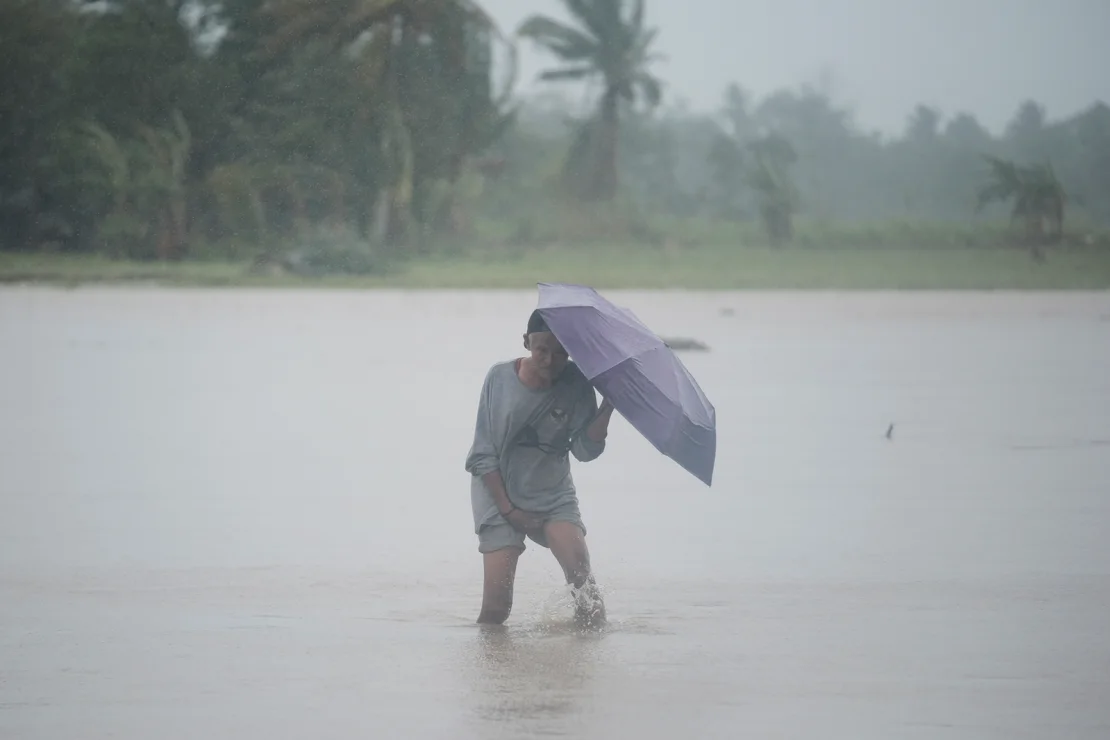
A man attempts to cross a flooded field in Libon town, on October 24, as Trami falls upon the Philippines.
Image source: CNN
Intensified climate disasters at the center of the Pacific Ring of Fire
By Isa Oliveira Taranto, Staff Writer
The Philippines has faced severe destruction and loss in the past weeks as Tropical Storm Trami descended upon the archipelago. As of October 28, the deadliest storm of the year left 136 people dead, more than 30 missing, and half a million without a home. The government struggles to rebuild and offer relief to the millions of affected citizens.
Storm Trami
Severe Storm Trami, known locally as Kristine, reached the Philippines on October 19th, 2024, particularly affecting the country’s northwestern region. More than 5 million people were in the path of the storm. Of those civilians, hundreds of thousands were displaced, with many fleeing to the more than 6,000 emergency shelters across the country.
Trami’s catastrophic consequences were primarily caused by the intense rain. Some areas were hit with over 19 inches (48 cm) of rainfall in 24 hours, a quantity equivalent to one or two months worth of precipitation. Heavy downpour led to landslides and flooding, burying buildings and vehicles in mud and taking many victims by surprise. The death toll continues to climb as the government rescue and reconstruction efforts reach remote areas, which floods have made even more inaccessible.
The Philippines are prone to recurrent natural disasters: Trami is one of eleven tropical storms that have made landfall in 2024. Consisting of thousands of islands along the border of two tectonic plates, the country suffers from intense seismic activity that causes frequent storms, earthquakes, and volcanic eruptions. This geographical condition has led to the region being nicknamed the “Pacific Ring of Fire” and the “Typhoon Belt.” The Philippines alone weather an average of 20 typhoons annually.
The Philippines’ national government has been attempting to develop disaster management policies that can accommodate frequent and large-scale disaster relief. After Tropical Storm Washi caused more than 950 deaths in 2011, the government and the University of the Philippines launched the Nationwide Operational Assessment of Hazards (NOAH). NOAH provides risk mapping and vulnerability assessments to help local authorities and families prepare for and recover from storms.
International stakeholders, such as the United States and the World Bank, have become more involved in recent relief efforts by providing monetary help. However, the government still struggles with accessing impacted regions and predicting typhoon behaviors.
Surviving Storms
Reign Flores, a third-year Psychology and Health Sciences student at UTSC, has witnessed first-hand the detrimental impact of tropical storms on the Philippines. In 2009, Reign’s family was directly affected by Typhoon Ketsana, which heavily damaged their house.
“I remember waking up to inches of water in the house already,” she said.
She had to “bolt out and evacuate” immediately. Fortunately, her family was safe, but they lost most of their furniture and appliances and were unable to save all of their dogs. They received help from the Red Cross and other international organizations to access canned food and shelter, as the government could only do so much.
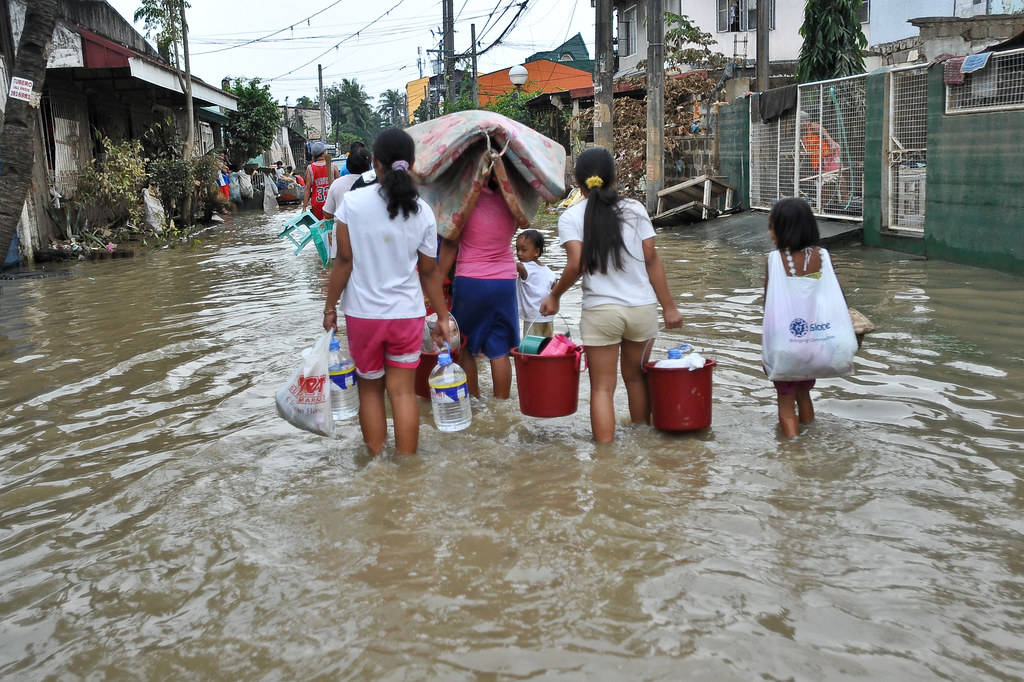
Typhoon Ketsana Aftermath in Manila, 2009
Image source: Flickr
Reign says she was relatively lucky that her family had access to other housing options afterward. Her experience is nonetheless a testament to the tangible impact of a typhoon’s destructive force, capable of completely changing one’s life in seconds.
Trami’s Aftermath
The Philippines is mobilizing national and local rescue initiatives to deal with what Trami left behind, as the weather clears. Simultaneously, the country is bracing for Typhoon Kong Rey (known in the region as Leon), which is expected to reach neighboring Taiwan on October 29.
Given the Philippines’ recurrent struggles with extreme weather, the country has weathered stronger and more frequent typhoons in recent years. Occurrences such as Tropical Storm Trami thus invite reflection of how the governments of developing countries can be better equipped for the increase in natural disasters linked to climate, especially since these countries will be the most impacted.
As Bongbong Marcos, president of the Philippines, stated in the aftermath of Typhoon Trami: “this is all new, so we [also] have to come up with new solutions.”

